
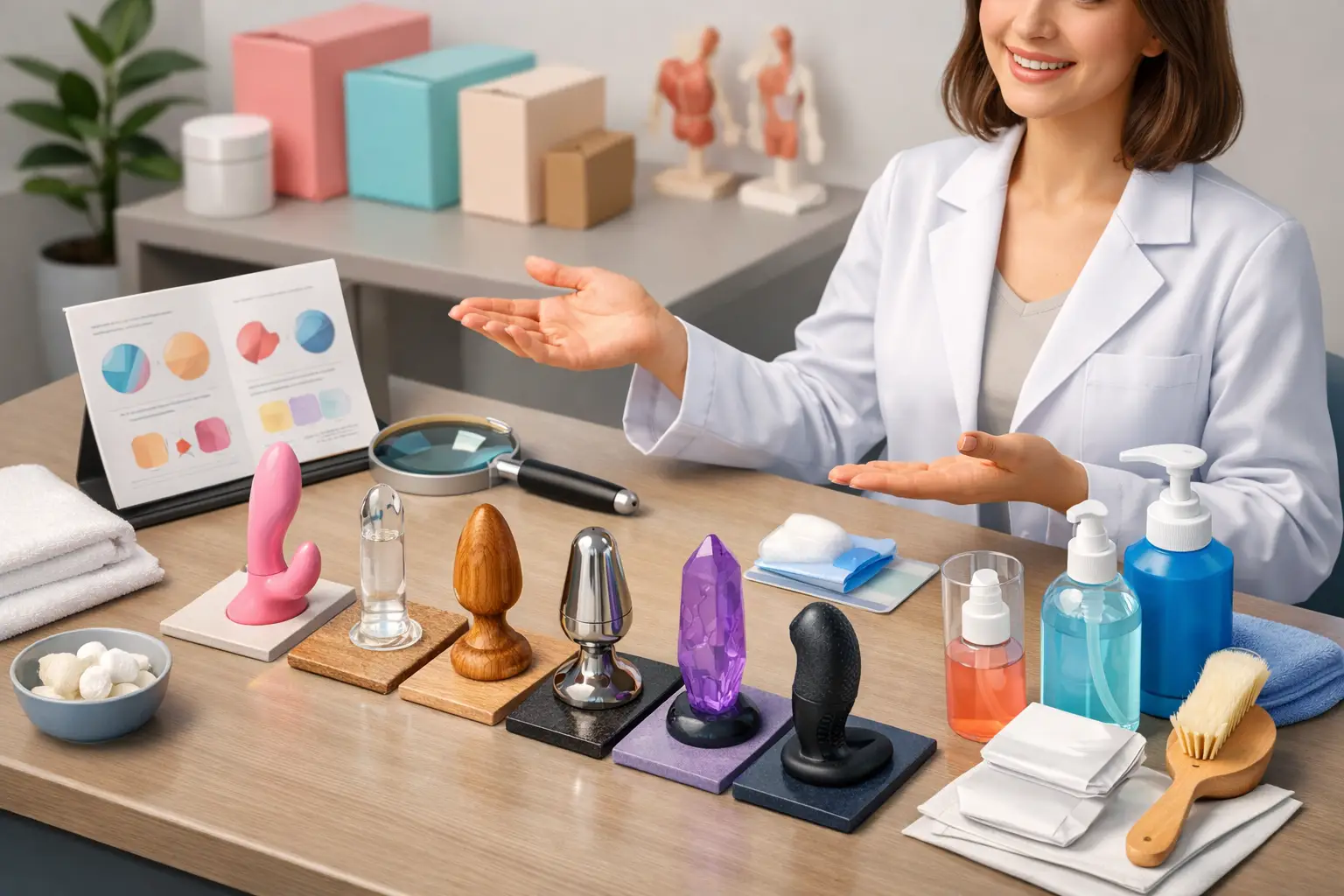
The material of an intimate product can make the difference between something that feels comfortable, simple to care for and worth reaching for again, and something that stays in a drawer. This guide to sex toy materials explained is here to make the labels less confusing, whether you are choosing your first vibrator, a couples’ accessory or a new addition to your self-care routine.
There is no single “best” material for everyone. Texture, firmness, cleaning preferences, sensitivities and the type of experience you want all matter. The most useful starting point is to look for non-porous, body-safe materials from a retailer that clearly describes what a product is made from.
Sex toy materials explained: what body-safe means
In intimate wellness, “body-safe” usually refers to materials that are designed to be used against the body without releasing unwanted chemicals under normal use. Good-quality non-porous materials are generally the easiest option because their smooth surface does not readily hold onto moisture, bacteria or product residue when cleaned properly.
It is worth knowing that “body-safe” is a helpful shopping term rather than one universal legal standard. A clear material listing is more reassuring than vague wording alone. If a product description simply says “soft touch” or “jelly” without explaining the base material, it may be harder to judge how to care for it and whether it suits you.
Your own comfort matters too. Even a well-made product may not be right for you if you dislike a very firm finish, prefer flexibility or know your skin is particularly sensitive. If irritation, pain or ongoing discomfort occurs, stop using the product and speak with a healthcare professional if needed.
Silicone: the popular all-rounder
Silicone is a favourite for good reason. Quality silicone is soft, smooth, flexible and non-porous, making it a reassuring choice for beginners and experienced shoppers alike. It can range from silky and cushioned to firmer and more structured, so two silicone products may feel very different in the hand.
Silicone is especially common in vibrators, clitoral stimulators, plugs and couple-friendly designs because it feels comfortable against the skin and is straightforward to clean. For most products, warm water and a mild, fragrance-free soap are enough, provided the product’s care instructions allow washing.
The main practical point with silicone is lubricant compatibility. Water-based lubricant is the safest default. Silicone-based lubricant can react with some silicone surfaces, making them tacky or damaging the finish. If you are unsure, choose water-based lubricant or test a tiny, discreet area first.
Not every product described as “silicone” is made entirely from silicone. Some have a silicone outer layer with an ABS plastic core, which is common and perfectly practical. The key is that the surface intended for intimate contact is clearly described.
Is medical-grade silicone better?
Medical-grade silicone is a high-quality term often used for silicone that meets particular standards for medical applications. It can be a positive sign, but it is not the only indicator of a suitable product. Look at the full product information, construction, care guidance and the retailer’s approach to material transparency rather than relying on one phrase alone.
ABS plastic: smooth, firm and low-maintenance
ABS plastic is a hard, non-porous plastic often used for vibrator casings, compact bullet designs and internal components. It has a polished, smooth finish and is durable enough for everyday use. You may also find it combined with silicone, giving a product both a firm structure and a softer external contact area.
For people who prefer precise pressure or a lighter, more compact design, ABS can be an excellent choice. It does not have the plush feel of silicone, though, and the firmness may not suit someone looking for a softer sensation.
Clean ABS with warm water and mild soap, taking care around charging ports, buttons and joins. A waterproof rating tells you how much contact with water the product can handle, so always follow the individual instructions rather than assuming every rechargeable product can be submerged.
Glass: elegant, smooth and temperature-play friendly
Body-safe glass, usually borosilicate glass, is non-porous, beautifully smooth and easy to clean. It is naturally weightier than silicone or plastic, which some people enjoy, and its firm surface can offer a different kind of pressure. Glass can also be gently warmed or cooled in water before use, never to an uncomfortable temperature, for those who enjoy a little sensory variety.
Choose glass products made specifically for intimate use and inspect them before each use. Do not use a product if it is chipped, cracked or damaged. While quality borosilicate glass is made to be durable, it is still glass, so careful handling and storage are sensible.
Stainless steel: durable with a luxurious weight
Stainless steel is another non-porous choice with a smooth surface, excellent durability and a noticeably weighted feel. Like glass, it can be warmed or cooled gently with water. It is often chosen by people who like a sleek design, firmer pressure and a product that can last for years with good care.
It is not the lightest option, and that is the trade-off. A substantial weight can feel premium and grounding for one person, but less comfortable or less convenient for another. If you are new to firmer materials, a smaller design may feel more approachable.
TPE and TPR: soft, flexible and worth extra care
TPE and TPR are flexible, rubber-like materials often used in strokers, sleeves and softer products. They can feel very lifelike, stretchy and comfortable, and they are frequently more affordable than silicone. That softness is exactly why many people enjoy them.
However, these materials are often porous or more difficult to fully sanitise than silicone, glass, steel or ABS plastic. They need careful cleaning and thorough air-drying after every use. Avoid storing them damp, and keep them away from other soft materials that could cause the surface to react or stick together.
A condom can offer an extra hygienic barrier with porous products, particularly if you want simpler clean-up. TPE and TPR products can still be enjoyable, but they suit shoppers who are happy to give aftercare a little more attention.
Materials to approach with caution
Older-style “jelly” products, PVC and unidentified rubber blends can contain plasticisers such as phthalates, particularly when their ingredients are unclear. They may have a strong chemical smell, feel oily or become sticky over time. These are not qualities you need to accept for intimate products.
Latex can also cause reactions for people with a latex sensitivity. If you have known allergies or highly reactive skin, choosing a clearly labelled, non-porous material such as silicone, glass, stainless steel or ABS plastic can make shopping feel simpler and more confident.
A strong perfume or chemical odour, an unclear material description, visible surface damage or a sticky finish are all sensible reasons to choose something else.
Cleaning and storage matter as much as material
Even the best material benefits from good care. Clean your product before and after use according to its instructions, using warm water and mild soap where appropriate. Dry it fully with a clean, lint-free towel or allow it to air-dry before storing it.
Keep products in a clean pouch or separate compartment, especially soft silicone items. This prevents dust collecting on the surface and avoids contact with materials that may transfer colour or affect the finish. For rechargeable products, make sure the charging point is dry before connecting the cable.
Avoid harsh household cleaners, bleach, alcohol-heavy sprays and strongly fragranced soaps unless the manufacturer specifically says they are suitable. Gentle care is usually all that is needed.
Choosing the right material for you
If you want the easiest, most versatile place to start, silicone is often a comfortable choice. ABS plastic works well for smooth, firm and compact designs, while glass and stainless steel appeal to those who enjoy weight and temperature variation. TPE and TPR can offer exceptional softness, provided you are prepared for more careful cleaning and storage.
The right choice is not about following a rulebook. It is about selecting something that supports your comfort, fits your routine and lets pleasure feel like the relaxed, judgement-free part of wellbeing it should be. A clearly described material is a small detail that can bring a great deal more confidence to your choice.


