
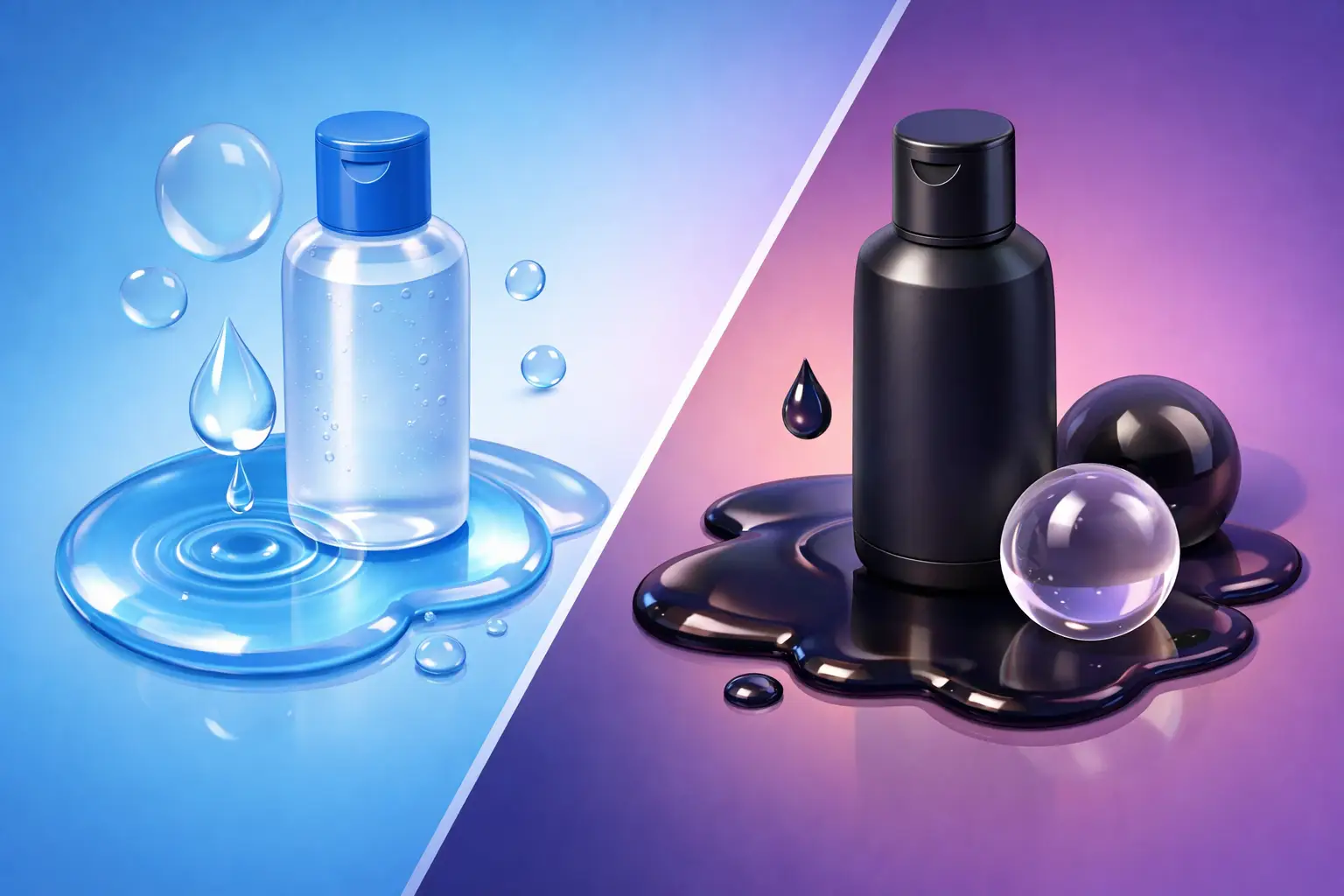
A lubricant should make intimacy feel more comfortable, not create another thing to worry about. When choosing water based vs silicone lube, the best option comes down to how you want to use it, whether toys are part of your self-care routine and what feels good for your body.
Both types can be body-safe, pleasurable and reassuringly easy to use. They simply have different strengths. Water-based lube is the flexible everyday choice, while silicone lube offers a longer-lasting, silkier glide. Knowing the difference means you can choose with confidence, whether you are buying your first bottle or refining what already works for you.
Water-based vs silicone lube: the practical difference
The main distinction is in the formula. Water-based lubricants use water as their base, giving them a lighter feel that is easy to wash away. Silicone lubricants use silicone ingredients to create a smooth, more durable layer of glide that does not absorb or dry out as quickly.
Neither is automatically better. Water-based formulas tend to suit people who want a simple, versatile option for solo pleasure, partnered intimacy and most intimate toys. Silicone formulas are often preferred when longer-lasting lubrication matters, such as extended play, shower intimacy or situations where frequent reapplication would interrupt the moment.
Think of water-based lube as the dependable all-rounder. Silicone lube is the low-maintenance choice when you want the glide to stay put.
Why water-based lube is often the easiest place to start
For beginners, water-based lube is usually the most straightforward choice. It is compatible with latex condoms and with virtually every type of intimate toy, including silicone, glass, metal and ABS plastic. That makes it especially useful if you are exploring a vibrator, clitoral stimulator or couples’ toy and want one product that works across your collection.
It also feels familiar and natural for many people. A quality water-based formula spreads easily, is not usually sticky at first and rinses away with warm water. It is kind to sheets, too, as any residue is generally much easier to clean than silicone-based alternatives.
The trade-off is that water-based lube can dry out, particularly during longer sessions or when there is more friction. That is completely normal and does not mean the product is poor quality. Add a little more as needed, or reactivate some formulas with a few drops of water. Keeping the bottle within easy reach can make reapplication feel like a natural part of looking after your comfort.
Water-based lube can be a particularly good fit for vaginal intimacy, external touch and toy use. If you are prone to sensitivity, look for a simple, fragrance-free formula designed for intimate use rather than relying on household moisturisers or oils. Less is not always more when it comes to ingredients, but a clearly labelled, body-safe formula gives you a better starting point.
When silicone lube comes into its own
Silicone lube has a noticeably silkier, more cushiony texture. Because it does not evaporate or absorb into the skin in the same way as water-based lube, a small amount can provide long-lasting glide. This can be helpful for anal play, where the body does not create its own natural lubrication, and for anyone who finds they need to reapply water-based lube frequently.
It is also a practical option for shower or bath intimacy. Water washes away water-based lube quickly, whereas silicone lube is water-resistant and stays slippery for longer. A little goes a long way, so start with a small amount and add more only if you need it.
Silicone lube is generally compatible with latex condoms, but it is always sensible to check the guidance on both the condom and lubricant packaging. If you use non-latex condoms, checking is equally worthwhile. Product instructions are there to help you use each item safely and comfortably.
The key consideration is toy material. Silicone lube should not be used with silicone toys unless the manufacturer specifically confirms compatibility. Silicone-on-silicone can sometimes affect the toy’s surface over time, leaving it tacky or damaged. If you are unsure what your toy is made from, choose water-based lube instead. It is the safer universal option.
Silicone lube also takes more effort to remove. You will usually need soap and warm water for your skin and toys, and it may leave a mark on delicate fabrics if not washed promptly. This does not make it inconvenient for everyone, but it is worth knowing before you reach for it on fresh bedding.
Comfort matters more than the label
A lube can be water-based or silicone-based and still not be the right formula for your body. If you have sensitive skin or have experienced irritation before, pay attention to the full ingredient list. Fragrances, flavourings, warming or cooling ingredients and some preservatives can feel lovely for one person and uncomfortable for another.
If comfort is your priority, choose a plain, unperfumed lubricant with clear body-safe information. You may also wish to look for one formulated to support vaginal comfort and pH balance, particularly if you are using it internally. Everyone’s body is different, so there is no need to push through stinging, burning or ongoing discomfort just because a product is popular.
Stop using a lubricant if it irritates you, wash the area gently with water and give your body time to settle. If symptoms continue, recur or concern you, speak with a pharmacist, GP or sexual health clinic. Looking after your wellbeing is part of pleasure, not separate from it.
Choosing for toys, condoms and different moments
The simplest way to decide is to start with what you will use the lube alongside. For silicone toys, water-based is the easy answer. For glass, metal or hard plastic toys, either type can work, although water-based is still easier to clean. If you use a toy with a motor or charging port, take care not to allow lubricant or water into any openings when cleaning.
For condoms, both water-based and silicone lube are commonly suitable with latex, unlike oil-based products. Avoid using oils, body lotions, massage oils or petroleum jelly with latex condoms, as they can weaken the material. A lubricant made specifically for intimate use offers more reassurance and less guesswork.
For a quick solo session or a first experience with a toy, water-based lube keeps things simple. For longer partnered intimacy, anal play or shower use, silicone may offer the lasting comfort you want. Some people keep both at home, using water-based for toy-friendly versatility and silicone for occasions that call for extra staying power.
How much lube should you use?
More than you think, perhaps. Many people use too little lubricant because they worry about making a mess or assume discomfort is something to work around. It is not. Start with a small pool in your hand, apply it where you want more glide and add more whenever the sensation changes from comfortable to draggy.
Using lube is not a sign that anything is wrong with your body, your level of arousal or your relationship. Hormonal changes, stress, medication, condoms, longer sessions and simple personal preference can all affect natural lubrication. Reaching for lube is a practical, confident choice that can make pleasure feel more relaxed and connected.
A simple choice for a more comfortable experience
If you want one bottle that works with almost everything, choose a quality water-based lube. If you want longer-lasting glide and do not use silicone toys, silicone lube may be the better match. Cherry Moon’s approach to intimate wellness is simple: choose what supports your comfort, curiosity and confidence, without overthinking it.
The right lubricant is the one that lets you stay present in the moment – comfortable in your body, at ease with your choices and free to enjoy pleasure on your own terms.


